The engineer who thinks like a lawyer.
I almost went to law school. I didn't—but the mindset never left.
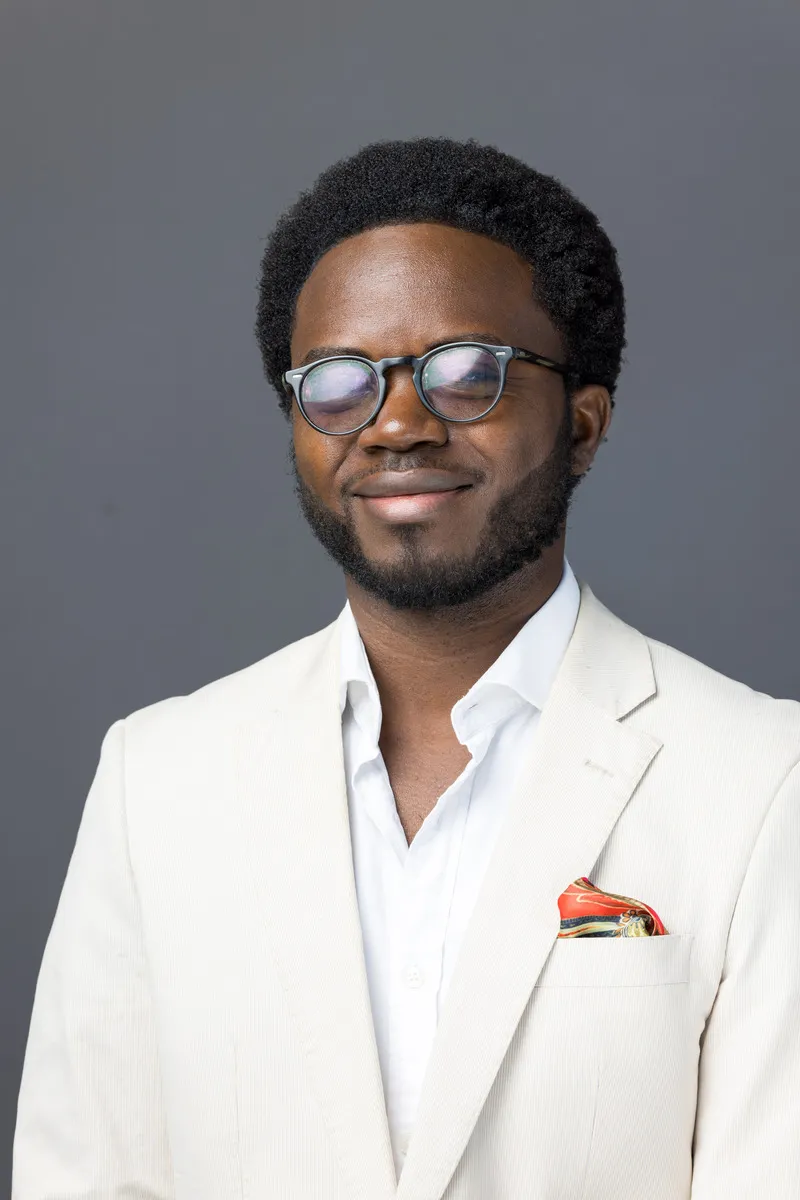
Before I became an engineer, I was going to be a lawyer. Systematic thinking. First principles. The habit of understanding the rules of a system before trying to operate inside it. That framing stayed with me through everything that followed.
Thirteen years of software engineering and product strategy. Work with companies most people have heard of - ThermoFisher Scientific, Parexel, Lufthansa, Deloitte. A stint as Director of Product at MOTUS. A book - The Art of Product. And eventually, the decision to stop building for large organisations and start building for the people they were leaving behind.
The thing I kept seeing
The more sophisticated AI became, the harder it was for certain people to access its benefits. Not because they weren't capable. Because the tools were built for IT departments, enterprise budgets, and 12-week implementations.
Law firms running on paper and manual follow-up. Consultancies losing deals because nobody had time to write the follow-up email. Founders with genuinely good product ideas stuck in an IDE at 70% done, unable to figure out why the thing they built didn't quite fit the user they were imagining.
I've spent the last few years building into those gaps.
What I'm building
Protomated is a studio I cofounded to build operations tools for independent professionals - solo attorneys and small firm lawyers (LegalContext), and consultants and agencies losing deals to slow follow-up (Salzy Meetings). The premise is simple: independent operators deserve the same quality of tooling as the firms they compete with, without the enterprise price tag or the IT department requirement.
The Product Path is the course I built because no structured, end-to-end process existed for going from a product idea to shippable code with Claude. It teaches the full pipeline - market research, documentation, user journey mapping, RICE scoring, sprint planning, and issue-by-issue development - using Claude and MCP integrations throughout. It's the process I use, documented so other builders don't have to figure it out themselves.
Advisory work runs alongside both. I work with a small number of founders and businesses at a time - early-stage founders figuring out what to build and how to take it to market, and organisations that need senior product input without a full-time hire. More on that here.
Why this matters to me personally
I'm a Nigerian immigrant who grew up with very little. Scarcity teaches you to validate before you commit - to try a bit before you go all in. That instinct shaped my approach to product development more than any methodology I've studied.
As a Black person in America, I don't often get to be around a lot of people who look like me and are building at this level. Part of why I do this publicly - the writing, the course, the newsletter - is to make it visible that this kind of work is possible. Success isn't just revenue. It's doors opened.
I believe independent professionals and solo founders represent some of the most important work happening in the economy. They're the ones taking the risk without the safety net. They deserve tools and processes that actually work for them.
The approach
A few things I believe that show up in everything I do:
Validation before commitment. Whether it's a product idea, a market strategy, or a hiring decision - try a bit first. The expensive mistake is the one you make six weeks in because you skipped the research.
Simplicity is sophistication. When we don't know something, we tend to overcomplicate things to cover for the naivety. The most advanced solution should be the easiest to use. If it requires an IT department, it's not done yet.
First principles over trends. Professional services will always have operational overhead. Client communication will always need to happen. Good products will always require understanding the user before building for them. These things don't change - the tools do.
Independence over lock-in. I have no interest in owning the ecosystem. I want founders and practitioners to own their future - not be held hostage by the platforms they rely on.